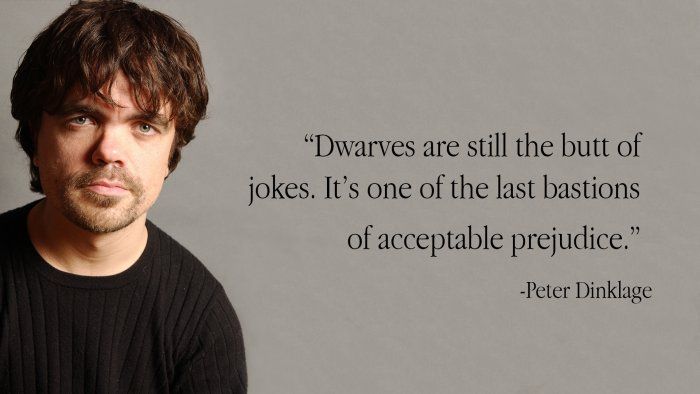
October is Dwarfism Awareness Month! Just as I have done previously with Infertility Awareness Week, I am using my Facebook feed to try to raise awareness about dwarfism by posting interesting info and links. I've gotten some good feedback so far, lots of interest and quite a few people thanking me saying they're learning a lot. That's exactly what I'm going for :-)
Below are the posts I have made thus far. I'll add to this periodically as I post more. If you'd like to also help raise awareness about dwarfism feel free to copy and paste any of the below info you like! Very few people know anything about dwarfism so the more awareness that can be raised, the better!
------------------------------------
October is awareness month for two causes that are near and dear to my
heart: Pregnancy and Infant Loss Awareness, and Dwarfism Awareness. I'll
be posting about both this month because neither are as well understood
as they should be and my hope is that I may be able to provide you, my
friends, with some information about them. [Hubs] and I never thought
we'd have to say goodbye to our first child and we never thought our
second would be born with Achondroplasia, the most common form of
dwarfism. We miss our angel every day and we are thankful every day for
the amazing son we hold in our arms. I hope you'll take a minute to read
my posts this month!
Learn some facts about dwarfism!
Did you know that the majority of children born
with dwarfism (80%) have average-sized parents? Dwarfism is caused by a
spontaneous gene mutation at conception. What prompts a gene to change
is not yet clearly understood. It is seemingly random and unpreventable,
and can occur in any pregnancy. That means you too could one day have a
child with dwarfism!
Did you know that there is over 200 different types of
dwarfism? Jack's form is called Achondroplasia, which is the most common
form. It is characterized by a large head, average sized trunk and
shorter arms and legs (think: Peter Dinklage aka badass Tyrion Lannister
from G.O.T.).
We
are grateful to have a diagnosis as it helps us and Jack's doctors know
what to expect and what to watch out for. Many babies with dwarfism
won't have a diagnosis confirmed for many months, even years, and some
never officially receive a diagnosis at all.
Most types of dwarfism have medical complications,
some more severe than
others. Some common ones associated with Achondroplasia (the type Jack
has) are sleep apnea,
hydrocephalus ("water on the brain"), spinal compression, chronic ear
infections, and orthopedic issues. We are always on the lookout for
signs of each of these problems and see specialists regularly. Now that
Jack is 6 months old we are beginning to notice some of the expected
delays in motor skill development due to his Achon. Most kiddos
with Achon will experience motor delays with things like controlling
the movements of the head, sitting up, crawling, and walking, but
intellectual development is
normal.
Did you know that the word “midget” is considered highly offensive to
those with dwarfism? This dates back to "freak show" times when little
people were only seen as here for others' entertainment and not as
people in their own right. Acceptable words to use are: dwarf, little
person, person with dwarfism, or short-statured. But most people with
dwarfism just prefer to be called by their name rather than by their
condition.
Please click on the below link to learn 5 things you
should never say to a little person and to get a glimpse of what daily
life is like for many short-statured individuals.
http://www.foxnews.com/health/2014/08/26/5-things-should-never-say-to-little-person/
As the parent of a little person this is hard for me to read but it just reaffirms why we need dwarfism awareness.
https://lovebecxo.wordpress.com/2015/10/02/6/
There
is no single treatment for dwarfism and most people with this
condition and their families do not feel it is something to be "fixed".
Instead, individualized accommodations such as
specialized furniture, stools, long grabbers/sticks, etc., are used by
people with dwarfism throughout their lives. Individuals with short
stature can
do just about everything an average-height person can, sometimes just in
a different way. Their height does not keep them from leading fulfilled
lives, achieving higher
levels of education, or accomplishing career and personal ambitions.
Dwarfism is not a disease and though opinions vary within the little
people community
about whether dwarfism is a disability, it is a recognized
condition under the Americans with Disabilities Act.

When [Hubs] and I found out at 36 weeks pregnant that our child had
dwarfism we had no idea what to do or what to think. We knew almost
nothing about dwarfism and didn't even know that we, as two average
height people with no other little people (LPs) in our families, could
even conceive a child with dwarfism! We were lucky to quickly find some
LP groups on facebook and were welcomed by some wonderful people into
this new family with open arms. We were offered all kinds of guidance,
resources, and support for which we will be forever grateful. It was
hard to wrap our brains around what was happening and that our child
(and in fact our future) would be very different from what we had always
pictured. One of the things that helped us come to terms with that is
the following essay we were given called "Welcome to Holland":
http://www.our-kids.org/archives/Holland.html